My story does not begin with me – it begins with my parents..
A SHY BOY FROM ARIZONA
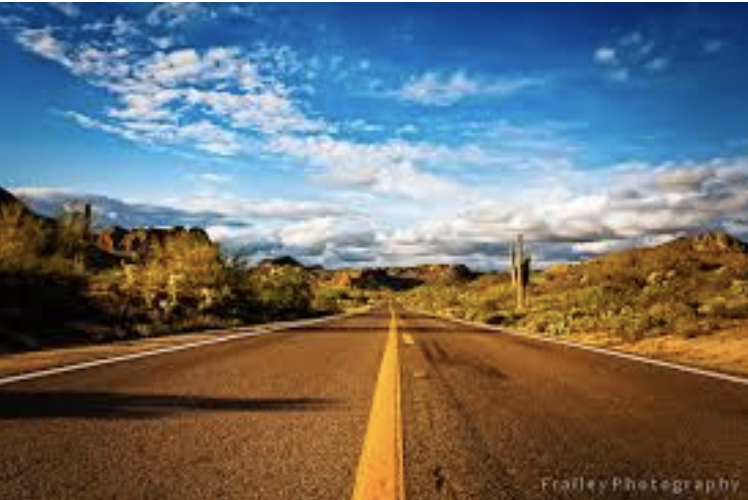
My dad was Robert Cowden. He was born in 1922 and was raised in the small mining town of Hayden, Arizona where his dad, Millard Martin Cowden, was chief engineer of the local power plant. Dad was a child during the Great Depression of the 1930’s and because his father was one of the lucky ones to not just have a job but a very good job, they were financially secure, and Dad had memories of them helping other families by doing things like secretly delivering boxes of food onto porches, at night.
My grandfather Millard was born and raised in Blount County, Alabama, in the deep south. He was the oldest of nine children. His dad, John Phelan Cowden saw to it that every one of his kids had a college education. Given the time period – early 1900’s, this was quite an accomplishment! John was a man of strong moral character, also known to be compassionate and generous. I have been able to learn this thru the writings of his daughter, my great aunt Sudie Cowden, who was good enough to write about her life. One great story is of when John was teaching Sudie how to ride a horse. He taught her to straddle the horse, which was considered a little unladylike at the time (most girls would ride side-saddle), but John considered it safer. One day it was reported that people in town were talking about how Sudie was riding straddle-style. John immediately told her to get on her horse, that they were going riding. They saddled up and John took them riding around all through town, with little Sudie straddling her horse. When he got home, he said, “There . . now let them talk about you!” Love this story – go Grandpa!
Millard was one of those lucky children of John Phelan, and now he was a dad himself raising his family in Arizona. In 1914, he had married Lenore Eletha Hedgpeth from Oregon; they had four children altogether; Sarah Helen, the oldest, my dad, Robert, Billy, who passed away as a child, and Louis Frederick. Sarah Helen and Louis Frederick grew up to be my Aunt Helen and Uncle Lou; you’ll hear stories about them later!
Due to the influence of Millard on my dad, he may have been the only kid in Arizona to grow up thinking he was a Southerner! He used to joke that he was 12 years old before he knew that “damn,” and “Yankee,” were two words! Pretty funny when you consider that they were living among the Yankees.
Dad grew up in the desert, in a much simpler time. There was a train that passed by the town at night, and he loved the sound of it as it blew its horn. He was a good big brother to his younger brother, and a good son. Like the men in generations before him, he developed a strong and true moral character. My dad was strong, true, humble and kind. In November of 1935, John Phelan died from a heart condition. Millard travelled home for the funeral, and while there became sick with pneumonia. Family members tried to convince him to stay there until he recovered, but he was determined to get back home to his family. This took several days of driving as there were no freeways back then, just back roads and perhaps a few highways. By the time Millard arrived home, he was delirious from the illness. It wasn’t long before he passed away, and this broke my dad’s heart, because he adored his father. I grew up hearing all about him. This radically changed the family and my dad’s life. Because my grandmother Lena felt she couldn’t afford to continue to raise him, it was decided that Bobby would go to live in El Monte, California, with his Aunt Elsie, Lena’s sister. Elsie was an invalid who remained in bed most of the time, due to having suffered a heat stroke in Phoenix once , which left her partially paralyzed. Elsie was married to Frank and there were other family members living there at the time, having decided to live together to survive the Depression. Aunt Elsie was actually a wonderful gal, and her home was a special place. I came to learn this just a few years ago thru family stories told to me by my cousin Ann Rotthaus.
Dad was a shy, and possibly slightly awkward, teenager. It didn’t help that he lived with a bunch of old people. He spent his spare time reading; he loved to read. His love of reading was a gift his father had given him, and he spent many a pleasant hour going on adventures with book characters, and also learning and educating himself. He graduated from El Monte high school. There was a young lady who lived across the street named Sherry; he fell in love with her and they were married. World War II broke out, and he signed up for the Navy. He was still very young, nineteen years old. In the earlier part of the war dad fought against Japan in the Aleutian campaign, near the islands of Attu and Kiska. He served on a tanker, and also was a coxswain (kok-suhn) for landing barges which carried supplies and sometimes soldiers to shore. Later, he served in the South Pacific and had moved up to Boatswain (boh-suhn) being in charge of riggings, anchors, cables, etc. and had men serving under him.
By now, Aunt Helen had married Clay Rotthaus. They had a daughter named Ann (my oldest cousin) and Grandma Cowden had come to live with them in Phoenix. Dad used their address as his home address, and when he was able to come home on leave, this is where he went. Somewhere in all of this my brother Jim was born. I’m not sure if or where he and Sherry ever lived together as a couple before he left for the sea Ann said that her Uncle Bob was such a handsome sailor, and that she had a huge crush on him.
While Dad was out at sea, he received a letter from Sherry telling him that she was going to divorce him. There was no way for Dad to call her, send a text or even an email. He was just stuck with this knowledge and with his pain. When the war was over in 1945, Dad returned home, still feeling empty and broken-hearted. I always have wondered from time to time why he did not have regular visitations with Jimmy; I recently found a letter he wrote to his mom (my Grandma Cowden) while still at sea, discussing how he would need a lawyer and would need to get custody of Jimmy (whom he called Wes) because Sherry was not a fit mother. I’m not sure why, but that did not work out and Dad eventually lost contact with Sherry and Jimmy. There must be a whole story involving a lot of pain there; I don’t know why I didn’t think to ask more about it when my dad was still alive, or even my mom for that matter! I have learned that we often think to ask about things when we are older, when opportunities are gone.
After the war, Dad took a job at a sheet metal shop in South El Monte, working for a man named Rosie. He rented a room close to where he worked, and at nights for something to do he would often frequent a bar and restaurant in the neighborhood, called The Ship. While patronizing this establishment, he became acquainted with a man named Bill James, whose parents owned The Ship. One night dad walked in, and met Bill’s wife, an attractive redhead with, as dad put it, a magnetic personality – Floreine. Was she sitting at a table or chatting with friends? Waitressing? I’m not sure, I can picture various settings in my mind, but the important thing is, they met!

A KANSAS GIRL
In the late 1880’s a woman stepped off a stagecoach in the middle of Kansas, looked out and said, “My, isn’t this a pretty prairie.” A town was later born there and was named Pretty Prairie, and that’s where my mom, Addie Floreine Hendricks, was born on September 9, 1919 to Addie and Isaac Hendricks. She was the sixth of nine children. I’ve been able to visit the humble little home off Main Street where she was born. Aunt Freeda wrote in her journal that mom was a beautiful red haired baby. A neighbor came over and upon seeing her, remarked that if she could produce a baby as beautiful as that, she would go home and get started right away. My grandmother didn’t quite approve of that remark because she didn’t think it was very ladylike. My grandmother called my mom Posie, because she said she was as cute as a posie. Another nickname was Toots. Altogether Ike & Addie’s nine children were: Freeda, being the oldest, then Charles, Carl, Wayne, Amelia Prue, Floreine, Betty, Harley and Vivian. There are many wonderful stories that came from this Hendricks family, my aunts and uncles, as their lives played out thru the decades.
By their request, us grandkids always called our grandparents Mom and Dad Hendricks. Dad Hendricks worked for the Golden Rule gas company. Mom Hendricks stayed home and took care of the family, a job which consumed her days from the crack of dawn til the last child was tucked into bed. The family moved to Cheney where Mom attended elementary school, getting there by horse, sometimes thru the snow. They later moved to Arlington, where Mom attended high school. Aunt Freeda had married Vernon Miller; they settled in on a plot of land and began farming wheat. Uncle Charles married Vera, and he ran a grocery store.
When mom was a young teenager, Ike developed some lung problems. The doctor told him he should go to California where the air was nice and clean. Imagine that! It didn’t help that this was around the time of the great dustbowl. Big brother Carl had already moved out to California on his own to kind of scout things out. He wrote letters home about wonderful things like groves filled with orange trees and ships coming in to the San Pedro Harbor. It all sounded so wonderful. The family decided they would move to California. Freeda and Vern, and Charles and Vera all decided to remain in Kansas as they had their families and careers established there. Mom’s family had a yard sale at their home in Arlington; a few days later they loaded what they could into their 1928 Ford and drove all the way to California, taking their three girls with them, Flo who was fifteen, Betty and Ramona. They left behind a sad tale of three children buried at Lonestar Cemetery in Pretty Prairie. Addie cried and cried upon leaving, it was so hard for her to leave everything behind. Her two adult children and their families, three precious children in the cemetery and her whole world of family memories.
The year was 1935, and many families were migrating west during this time that was known as the Dust Bowl era. There were no freeways, only back roads and a few highways, and they must have spent some time on Route 66. The trip took several days, and there were no fast food places along the way
When they got to California, Carl had already found them a apartment in Glendale, which they paid $16 a month for! He had also gotten Ike a job. Flo started school at Glendale High, and it was culture shock for her, coming from Kansas to Southern California. But one thing she loved was being able to walk to school in the morning in much more temperate weather, needing only a sweater at most. She settled in and eventually made good friends. She loved doing things like going to Santa Monica beach, and playing tennis at Griffith Park.
Mom graduated from Glendale High School. She remembered being up in the Verdugo Hills on the morning of December 7, 1941, collecting firewood with a friend, and hearing on the radio that Pearl Harbor had been attacked. During the war years, Aunt Betty had a boyfriend named Bill James. It somehow worked out that Bill became Mom’s boyfriend. Bill served in the Air Force, but once when he was home on leave, they got married. They lived in Colorado and Seattle. Their son Gary was born in December of
When the U.S. declared victory in WWII, Mom, Bill and baby Gary went to downtown Seattle to see all the celebrating that went on. After the war, they moved to Southern CA, and began helping Bill’s parents with their restaurant in South El Monte, The Ship. Yes, we’re back to The Ship again!
IT STARTED WITH A DANCE
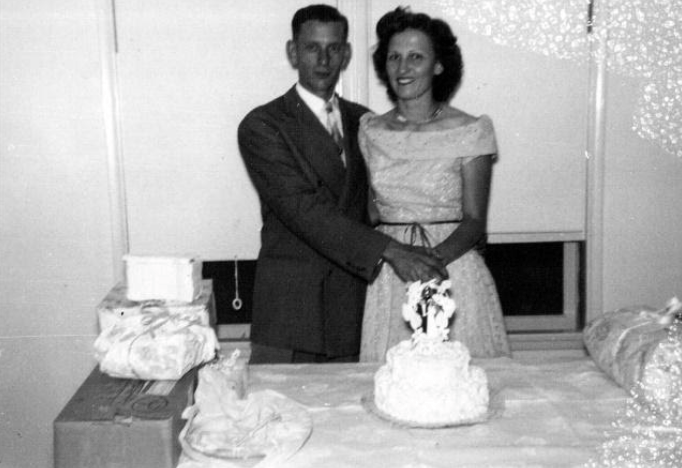
When Flo first met Bob, she thought he was “a snob.” That is because he was so shy, he didn’t know what to say, but Mom didn’t know that. He was probably overwhelmed by this attractive redheaded lady with the sparkling personality. Mom and Bill were having problems in their marriage. Mom felt that Bill was not kind to her or to little Gary, and she had grown very unhappy. I’m not exactly sure how or when Mom & Dad started dating, or exactly how and when Mom & Bill’s marriage disintegrated, but I have a few snippets of knowledge. Mom told me once of the first time she danced with Dad. They danced to the Tennessee Waltz. She thought what a kind gentleman he was, such a refreshing change from Bill. Mom also told me that when she left Bill, she had Gary in her arms. She told him she was leaving. He said if you walk away I will shoot you. She said something like, well if you shoot me you will have to shoot me in the back because we are leaving. And she turned and walked away, and he didn’t shoot her. Was he really holding a gun? Wow, Mom was brave. I think Mom also said that when she and Dad first started dating, they would go to his place and listen to records.
Mom worked at the phone company, as a telephone operator on the night shift. Sometimes she was the person that recited the time, over and over and over. People could call up and hear what time it was. When I was growing up, this was a recording. But in the 1940’s, it was a live human being who was reciting the time over and over! On nights when mom was doing this, Dad would call up just to hear her voice say the time. Mom had to leave little Gary when she went to work, and it was hard for her. She always told me she got a lot of help from her mom and that she couldn’t have done it without her. Uncle Lou recounted memories of going hot rodding with Mom in Dad’s car, when dad was at work. Uncle Lou was just a teen then. Mom and Dad both loved hot cars.
On Easter morning of 1949, Dad picked Mom up from work after she’d completed a night shift. He had an Easter basket for Mom and one for Gary. In Mom’s Easter basket was something special – an engagement ring. Mom loved this memory. Seven or eight years ago I was with Mom on Easter morning in Roseville. We had attended church with Gaye and Chris. Mom teared up as she recalled this memory, and said she missed Dad.
LITTLE CHAPEL OF THE WEST
Mom and Dad drove to Las Vegas and were married at the Little Chapel of the West on August 13 th , 1949. They were accompanied by very good friends Bill Campbell and his wife. Dad worked for Bill in a sheet metal shop. Mom and Dad bought a home out in Baldwin Park, an up and coming suburb, 17 miles east of LA. At that point in time, it was still fairly rural compared to when I arrived on the scene, 10 years later.
On the other side of the world, the Korean conflict was brewing. Dad loved he sea, and it was calling to him, so he enlisted in the Navy again. He left behind him a little baby growing in my mom’s tummy, and when he returned home, he met this baby girl, my big sister Gaye, for the first time. She was born on October 5th , 1951. Mom and Gary stayed with Mom and Dad Hendricks while Dad was gone.
Dad eventually came home from the war and went back to work at the sheet metal shop. Gary recalls good memories of their family life together. Dad coming home at night and them all sitting down to dinner together. It was the 1950’s. Mom always said that the 50’s were her favorite decade. She loved the music and the cars. And she was a young wife with kids at home, raising a family. The 50’s was a great time for that! Rock and roll came into being in 1956. Civil rights issues and protests regarding segregation were popping up around the country. Eisenhower was nearing the end of his 2nd term as President, and the 1950’s, an incredibly unique decade, were drawing to a close. Early in the summer of 1958, mom found out she was expecting again (here is where I enter the picture). Boy was she surprised! It had been six years since Gaye was born, and she was 38 years old.
 cindylcaruso.com